Translational research in
ophthalmic AI.
Clinical practice and AI, on the same scans
Athreya MedTech is a consortium of ophthalmologists, an ocularist and AI engineers in Bengaluru and the United States, working on the same ocular ultrasound scans rather than in separate rooms.
A research project, built to support clinicians — not a diagnostic device.
MERIT AI
Medical Embedding & Reasoning Intelligence Technology
Stage one — Classification (OCS)
Asks whether a scan shows something abnormal — not what, and not where. In a clinic where nobody reads B-scans, that first sort decides which case gets escalated. Built and running.
Athreya MedTech at work


Hands on the probe: participants scanning during an APPL session.
Our Purpose
A small consortium of clinicians, an ocularist and engineers, working on one problem: helping a clinician read an eye ultrasound.
Our Mission
To help a clinician read an eye ultrasound without years of B-scan training, by building MERIT AI one stage at a time — and proving each stage on phantoms, then animal eyes, then human eyes before we claim it.
Our Vision
A handheld probe and a laptop that let a district clinic in Karnataka get the same reading of an eye ultrasound a tertiary eye hospital would, with a clinician signing every result and a specialist able to review the case when it matters.
Core Values
The rules we hold ourselves to when deciding what to build and what to say about it.
Innovation with Purpose
Every tool we build serves a clinical need. The first question on every project is which measurement a clinician currently takes by hand, and how often it comes out different the second time.
Built for the Clinic, Not the Demo
Ocular emergencies such as retinal detachment are time-critical, and many first-contact clinics have no one trained to read a B-scan. We design for that clinic: a handheld probe, a short workflow and a clinician who signs every result.
Interdisciplinary Innovation
Ophthalmologists, AI engineers, ocularists, and research methodologists work as one team. The ocularist who fits artificial eyes and the engineer who fits the segmentation ellipse review the same scans.
Integrity & Trust
Scans are de-identified before analysis, models run on our own hardware rather than a public cloud, and data handling is designed around HIPAA and the Indian DPDP Act.
Global Responsibility
India has 1 ophthalmologist per 70,000 rural residents. A portable probe with measurement software is one way to take part of an eye examination to where those residents are. Remote review by a specialist is planned, not yet built.
What Sets Us Apart
Where the data lives, where the scans come from, and who certifies the training.


The team that builds and runs the stack, at Digital Mega Factory.
On-Premise, Zero-Cloud Dependency
Patient data never leaves the facility. Our entire AI stack runs on dedicated hardware — no AWS, no Azure, no third-party cloud.
- Dedicated GPU and CPU nodes on-premises
- Scans de-identified before they reach a model
- No patient image sent to a third-party AI service


Preparing phantom material at the bench.
Embedded Clinical Partnership
De Cure Center in HSR Layout, Bengaluru, is where Phase 2 data collection happens: the scanning, the clinical review and the prosthetics practice that shaped the project.
- Ophthalmic equipment and a working clinical practice on site
- Karnataka government school and college screening camps
- Director: 12+ years of ocular and facial prosthetics expertise


Certificates of completion, issued through Validus Institute.
US Research Partner & Certification
Validus Institute Inc. in San Diego issues the Academy certificate, leads research-methodology training and is co-applicant on the NIH SBIR submission.
- Certificate of Completion issued through Validus Research
- Dr. Majd Oteibi (MD, DHSc, CCRP, FRSPH) leads research methodology
- NIH SBIR co-applicant — federal grant submission pathway


A cohort works through a scanning exercise together.
Integrated Education Pipeline
Academy courses run on Aider Digital's learning platform, so a student can move from a training cohort into research-intern work on the same scans.
- Digital Ophthalmology Dialogues — monthly expert sessions
- APPL sub-track: phantom tissue & Butterfly iQ3 probe training
- Research Coordinator → Principal Investigator certification pathway
MERIT AI
Medical Embedding & Reasoning Intelligence Technology
MERIT AI is being built in three stages. Each stage answers a different question about an eye ultrasound, and each is proven on its own before the next is added.
Explore MERIT AI ResearchThree stages, one system
Classification
OCS · Ocular Classification SystemAsks whether the scan shows something abnormal — not what, and not where.
Built and running
Segmentation
AAS · Advanced Annotation SystemFinds the structures in the scan and outlines them.
Live, in daily use by our validating ophthalmologist
Tissue Identification
TIS · Tissue Identification SystemWill label what each region is made of, so the image is read and not just outlined.
In development
Together they are MERIT AI. A clinician reviews and signs every result.
Work a Clinician Can Trust
What we count as progress, and what has to be true before we say a stage is ready.
One Stage at a Time
Classification, then segmentation, then tissue identification. Each stage is proven on its own before the next is built on it.
AI Finds, Clinician Decides
The model locates the globe; a clinician reviews, corrects and signs every result before it counts.
Point-of-Care Solutions
Works with handheld probes, including Butterfly iQ3, and with standard PNG, JPEG and DICOM exports.
Validation in Order
Phantom, then animal, then human eyes. Nothing is described as validated until the step that proves it is complete.
A result is only useful if a second clinician, on a second day, would reach the same one. That is the bar every stage of MERIT AI is held to, and a clinician reviews and signs every result.
Meet Our Researchers
Ophthalmologists, an ocularist, ultrasound researchers and software engineers in Bengaluru and the United States.

T. Venkataramani
MBA (JBIMS) · M.E. Electronics & Telecommunications · B.E. Electrical EngineeringChief Executive Officer
Chief Executive Officer of Athreya MedTech, and CEO of Ayan Tech Solutions, Chennai. Four decades across national defence, aerospace quality assurance, global HR operations and enterprise technology.
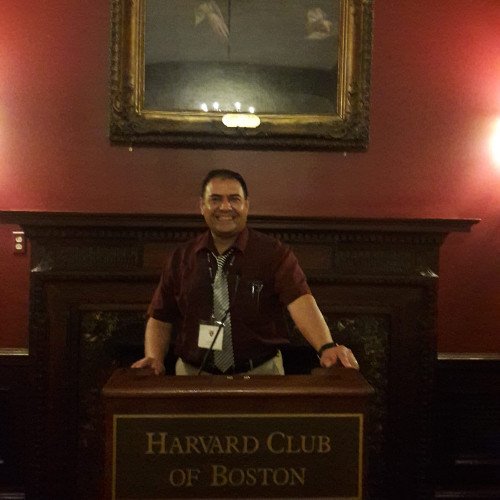
Dr. Hadi M. Khazaei
MBBS, MS, MCR, FRSPHChief Medical Scientist
Founder and Chief Medical Scientist of Athreya MedTech. Translational researcher in ophthalmic AI, orbital ultrasonography, and point-of-care diagnostics. Visiting Professor at Portland State University.

Bala Balaguru
MDCEO & Business Lead
CEO and Business Lead of Athreya Inc. (Edison, NJ). Leads business operations, investor relations, NIH SBIR grant management, and hardware procurement for the consortium.
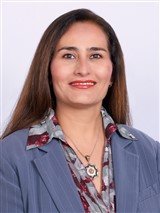
Dr. Majd Oteibi
MD, DHSc, CCRP, FRSPHCEO & Clinical Research Director
CEO of Validus Institute Inc. (San Diego, CA). Leads research methodology training, is co-applicant on the NIH SBIR submission, and issues APPL Academy certificates.
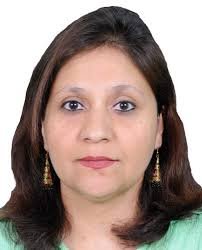
Kaneez Abbas
Healthcare AnalystHealthcare Analyst & Researcher
Healthcare Analyst and ophthalmic imaging researcher at Athreya MedTech. 4 years of ophthalmic technology experience at Legacy Devers Eye Institute. Leads Biometry and Ocular Ultrasound training in the APPL Academy.
Post-Graduate Certification in Translational Research
Digital Ophthalmology Dialogues is a one-year programme run by Athreya MedTech with certification through Validus Institute. Sessions cover ultrasound physics, ocular biometry and research methods, and students scan phantoms with the same probe the research team uses.
First Batch — 10 Sessions Complete
February – April 2026 · Aider Digital LMS · Certificate via Validus Institute
2 Semesters
1-Year Programme
US Certificate
Issued through Validus Institute
APPL Sub-Track
Phantom Lab & Prosthetics

Preparing phantom material at the bench.
Session Highlights
Feb 22
Consortium Kickoff
Dr. Hadi
Mar 29
Ultrasound Physics & Instrumentation
Dr. Hadi
Apr 5
Ocular Ultrasound & Biometry
Dr. Kaneez Abbas
Apr 12
Research Methodology
Dr. Majd Oteibi
Apr 26
Phantom Lab Inauguration
Dr. Kaneez Abbas
+ 5 more sessions completed
Advanced Prosthetics & Phantom Lab
De Cure Center is an ocular and facial prosthetics practice in Bengaluru, and its director has spent more than 12 years fitting artificial eyes and scleral shells. That work is why MERIT AI started with the shape of the globe. The Phantom Lab scans synthetic eye phantoms with a Butterfly iQ3 probe to produce images with a known ground truth, which is how every measurement is checked before it meets a patient.
12+
Years of prosthetics practice
iQ3
Butterfly handheld probe
175
Phantom training images
600
Frames per phantom scan


Finishing and polishing before the prosthesis is placed.
Services
Phantom Lab
The phantom laboratory (175 training images, 600 frames per scan) and De Cure Bengaluru (Butterfly iQ3 portable probe, phantom tissue models)
BOS INNOVATE 2026
1 August 2026 · Anantya, Palace Grounds, Bengaluru
Bangalore Ophthalmic Society
MERIT AAS was presented at BOS INNOVATE 2026, the innovation showcase inside BOS Summit 2026. Feedback from that session added optic-nerve thickness to the next stage, tissue identification.
AI finds the eye
The globe is located automatically in the ultrasound scan, so the starting point no longer depends on who is holding the probe.
Mathematics measures it
Measurements are derived deterministically from that geometry rather than from hand-placed callipers — the same scan gives the same answer.
At the point of care
It runs on a handheld probe in the clinic, supporting IOL planning and ocular volume assessment where the patient already is.
Research and decision-support for clinicians — not a diagnostic device.
Consortium & Institutional Partners
Athreya Inc.
Edison, NJ
Validus Institute Inc.
San Diego, CA
De Cure Center
Bengaluru, India
Digital Mega Factory
Bengaluru, India
Aider Digital
Bengaluru, India
Athreya Inc.
Edison, NJ
Validus Institute Inc.
San Diego, CA
De Cure Center
Bengaluru, India
Digital Mega Factory
Bengaluru, India
Aider Digital
Bengaluru, India
Have Scans, a Clinic or a Research Question?
We are looking for ophthalmologists willing to review cases for human-eye validation, institutions that can host a scanning site, and engineers and students who want to work on ocular ultrasound. Tell us which of those you are.
Research and clinical partners